
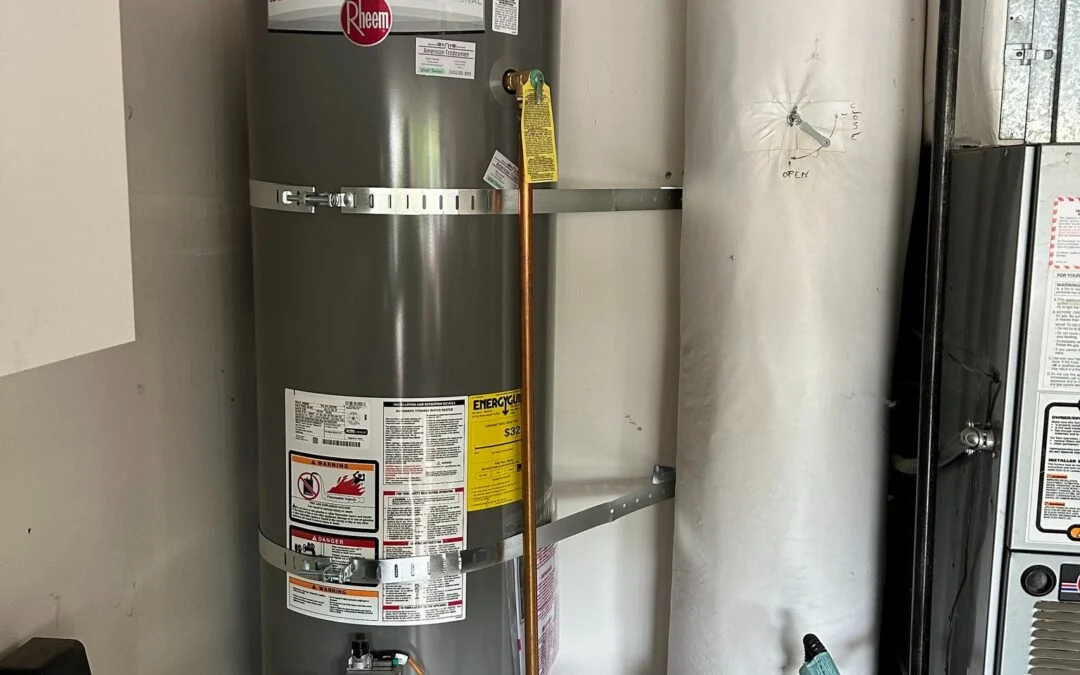
Most water heater failures don’t start with a flood. They start with a small drip, a popping sound, rusty water, or a tank that has to work harder every month because sediment is sitting at the bottom.
That’s why American Tradesmen Plumbing is starting our blog with the habit that saves homeowners the most money: a monthly water heater checkup.
You don’t need to be a plumber. You need ten minutes, a flashlight, and a plan for the work that should stay with a licensed tech — especially the yearly flush and safety inspection included in our Home Advantage Plus Plan.
Why monthly matters in Yamhill County
Yamhill County water heaters work hard. Well water can leave mineral sediment. City water still leaves scale over time. Cold snaps stress pipes and fittings. Oregon code also expects tank heaters to be seismically strapped and, in many homes, paired with an expansion tank.
A tank water heater usually lasts 8–12 years. Tankless units can last longer — but only if scale is kept off the heat exchanger. Monthly checks catch the early warning signs. Annual professional service keeps the unit efficient and safe.
Your 10-minute monthly checkup
Do this on the same day each month, like the day you pay utilities.
1. Look for water where it shouldn’t be.
Check the tank, fittings, drain pan, T&P discharge pipe, and the floor around the unit. A slow drip today is often a failed valve, loose fitting, or a tank that’s starting to rust through.
2. Listen.
Popping, rumbling, or banging usually means sediment is baking on the bottom of a tank heater. That sediment makes the unit less efficient and shortens tank life.
3. Check the water.
Rusty, cloudy, or sulfur-smelling hot water is a flag. It can mean a worn anode rod, sediment, a failing tank, or a tankless unit that needs descaling.
4. Confirm the temperature.
120°F is the sweet spot for most homes: hot enough for showers and dishes, safer for kids and guests, and easier on the tank.
5. Glance at the T&P valve and discharge pipe.
The temperature-and-pressure relief valve is a safety device. It should be free of corrosion, and the discharge pipe should run downward with a clear path. Don’t force the lever unless you know how to test it safely — hot water can dump out fast.
6. Check straps, pan, and clearances.
In Oregon, tank heaters need proper seismic straps. The unit should have breathing room. Storage boxes stacked against a gas heater or blocking a tankless intake are a problem.
7. Know your fuel type.
- Gas tank: look at the area around the burner and vent. If you ever smell gas, leave and call.
- Electric tank: listen for a breaker that trips or a unit that only makes lukewarm water.
- Tankless: check the error-code display and the inlet screen area for debris.
- Heat pump / hybrid: keep airflow around the unit. Dusty mechanical rooms cut efficiency.
If anything looks off, stop there. Take a photo and call ATP at (503) 332-9219.
What you should not DIY every month
Leave these to a licensed plumber:
- A full tank flush and anode-rod inspection
- Tankless descaling
- T&P valve replacement
- Gas line, venting, or electrical work
- Expansion-tank and pressure-regulator diagnosis
- Any leak at the tank itself (that usually means replacement, not a patch)
A monthly look-over keeps you ahead of trouble. The yearly professional service is what actually extends the life of the heater.
How this works with ATP memberships
Preventive plumbing is the point of our membership offering.
Exclusive Member Discounts
Members receive 15% off major plumbing services — including water heater repair and replacement when a unit is truly at the end of its life.
Home Advantage Plus Plan
This is the professional half of the monthly-checkup habit:
- Yearly water heater flush
- Full home plumbing inspection
- Plumbing system updates
- Scheduled maintenance per service
- Water pressure check
High pressure is one of the quiet reasons water heaters, supply lines, and fittings fail early. A pressure check on a scheduled visit is cheaper than a Saturday emergency leak.
Think of it this way:
- You do the 10-minute monthly walkaround.
- ATP handles the annual flush, inspection, and the repairs members don’t want to gamble on.
When a checkup means “call now”
Don’t wait for the next scheduled visit if you see:
- Water in the pan or on the floor
- No hot water, or water that goes cold mid-shower
- A T&P valve that drips constantly
- Scorching water
- A pilot that won’t stay lit, or a gas odor
- A tank 10+ years old with rust or leaking fittings
- A tankless unit throwing error codes or losing flow
American Tradesmen Plumbing repairs, flushes, and replaces tank and tankless water heaters for homes and businesses in Yamhill and surrounding areas. We handle the connections, relief valves, and code items that keep the job safe — not just “working for now.”
Start the habit this month
Pick a date. Put “water heater checkup” on the calendar. Walk the unit with the list above.
If you want the professional piece handled on a schedule — flush, inspection, pressure check, and member pricing — ask us about the Home Advantage Plus Plan.
Call (503) 332-9219 or schedule online at atp-or.com.
Don’t wait until a small drip becomes a cold-shower morning.